
Document
Record the crack, surrounding wall, drainage conditions, and leak history.
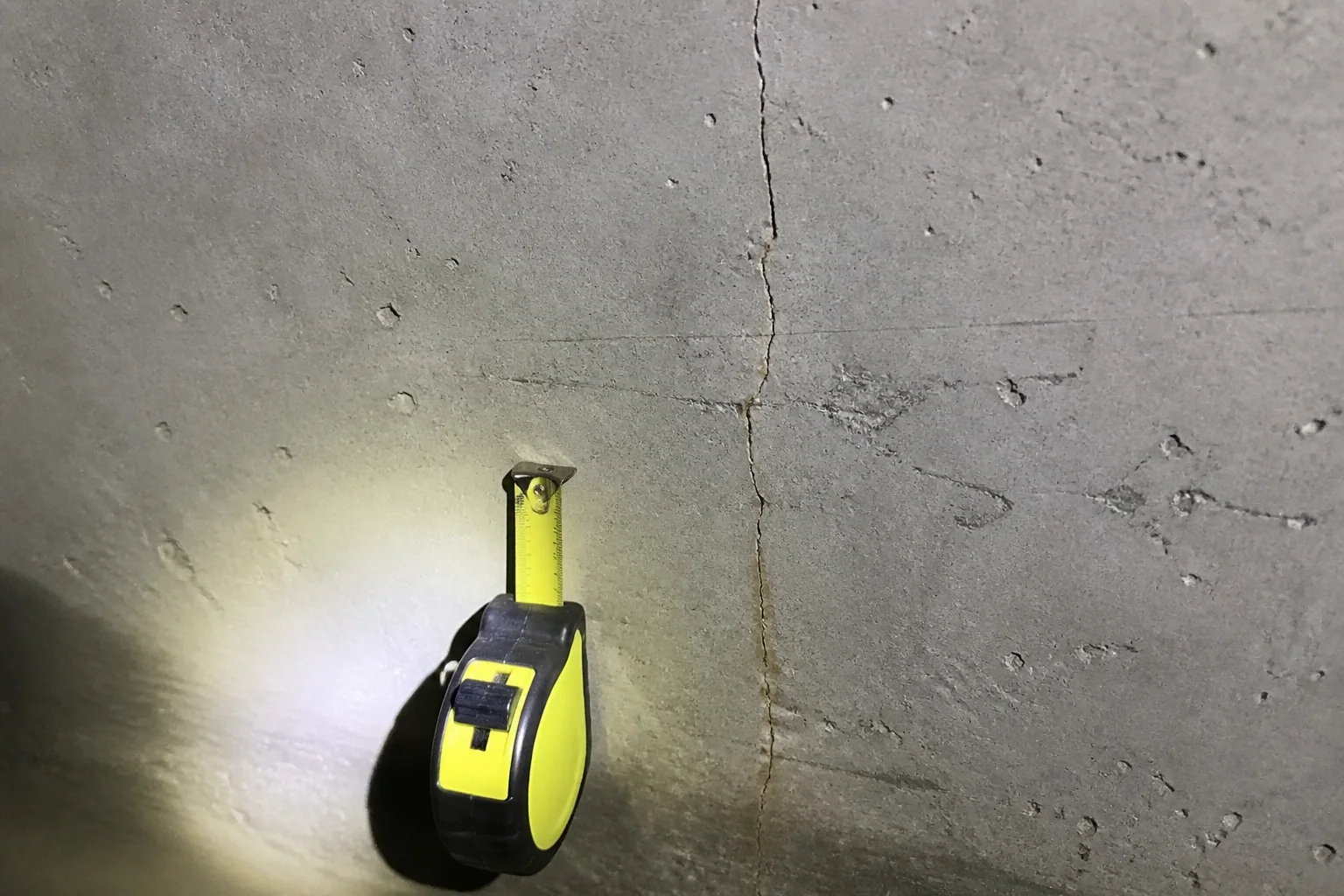
A vertical shrinkage crack, a moving crack, and a horizontal crack do not mean the same thing. We document the location, width, direction, moisture pattern, and visible movement before discussing a repair.
 REPRESENTATIVE IMAGE / FOUTargeted leak repair
A vertical shrinkage crack, a moving crack, and a horizontal crack do not mean the same thing. We document the location, width, direction, moisture pattern, and visible movement before discussing a repair.
Crack type documented
Interior and exterior access considered
Clear escalation when structure may be involved
+Water staining from a visible crack
+White mineral deposits
+A crack that has changed
+Horizontal or stair-step cracking
Take photos when it is safe. Never enter water near electrical equipment.Record the crack, surrounding wall, drainage conditions, and leak history.
Determine whether waterproofing repair is appropriate or further review is needed.
Complete the agreed method and explain what changes to watch for.
Specific product, warranty, price, and schedule details are confirmed in the written scope.
That is the purpose of the basement assessment. The visible leak is not always the source, so the assessment looks at drainage, grading, foundation entry points, the sump system, and when the problem occurs before a repair is recommended.
Yes. The proposed repair should identify the area being addressed, the system or materials recommended, what is included, and any warranty terms. Final warranty details must be confirmed by the business owner before publication.
Yes. Photos of the leak area, foundation wall, sump pit, discharge line, and the outside grade can help the assessor prepare, but an on-site visit may still be needed to identify the cause.